
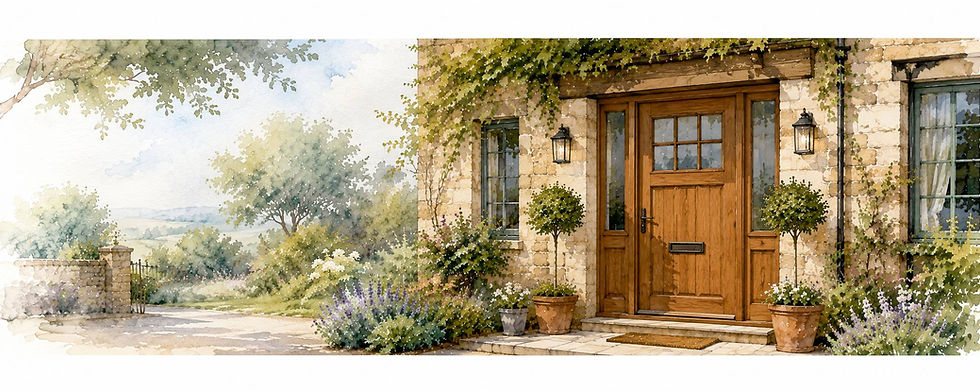
Timber Front Doors
Natural, secure and beautifully crafted external doors for traditional homes, modern properties and character-led renovation projects.
Timber front doors remain one of the most attractive choices for homeowners who value natural materials, strong construction and architectural character.
A well-made timber entrance door can suit almost any style of property, from Victorian and Edwardian houses to cottages, listed buildings, barn conversions and contemporary homes. Timber can be shaped, detailed, painted, stained and glazed in ways that are difficult to reproduce with many factory-moulded alternatives.
Modern external wooden doors can also provide strong security, good insulation and long service life when they are correctly designed, finished and installed. The key is choosing the right timber, construction method, glazing, hardware and protective finish for the exposure and style of the property.

What Is a Timber Front Door?
A timber front door is an external entrance door made primarily from natural wood or engineered timber components.
Depending on the design and manufacturer, the door may be constructed from:
-
Solid hardwood
-
Solid softwood
-
Engineered timber
-
Laminated timber sections
-
A timber frame with insulated internal layers
-
Traditional mortise-and-tenon joinery
-
Multi-layer bonded sections designed to resist movement
The door may be painted, stained, oiled or factory finished. It can be completely solid or include glazed panels, side windows, fanlights and decorative detailing.
The phrase solid wood exterior door is often used broadly, but not every timber door is formed from one continuous piece of wood. High-quality engineered timber can offer greater stability by using selected layers or laminated sections to reduce twisting and warping.
Why Choose a Timber Front Door?
Timber offers a combination of warmth, character and design flexibility that many homeowners find difficult to match with other materials.
The main benefits include:
-
Natural appearance
-
Strong construction
-
Traditional craftsmanship
-
Excellent design flexibility
-
Bespoke sizes and shapes
-
Good thermal performance
-
Strong security potential
-
Repairability
-
Long service life
-
Suitability for heritage properties
-
Wide choice of paints and stains
-
Ability to refresh the finish over time
A timber front door can be designed as a true part of the building rather than simply fitted into an opening.
Natural Character and Kerb Appeal
The grain, texture and depth of real timber give a front door a distinctive appearance.
Even when painted, a timber door often retains a more handcrafted and substantial feel than a moulded alternative. Where the wood is stained or oiled, the natural grain becomes a major feature of the entrance.
Timber works especially well with:
-
Brick elevations
-
Natural stone
-
Painted render
-
Timber cladding
-
Period mouldings
-
Traditional porches
-
Decorative fanlights
-
Georgian and Victorian architecture
-
Cottage-style properties
-
Contemporary natural-material schemes
A carefully proportioned timber door can significantly improve the appearance and perceived quality of the whole front elevation.
Traditional Timber Front Doors
Traditional timber doors may include:
-
Four-panel or six-panel layouts
-
Raised and fielded panels
-
Moulded rails and stiles
-
Glazed upper panels
-
Decorative fanlights
-
Coloured or leaded glass
-
Brass or bronze hardware
-
Traditional knockers
-
Letter plates
-
Side panels
-
Period-style architraves
-
Painted heritage colours
These designs can be especially suitable for Victorian, Edwardian, Georgian, Arts and Crafts and cottage-style homes.
The proportions of the panels, glazing bars and mouldings should suit the building. Poorly chosen modern detailing can look out of place even when the door itself is made from good-quality timber.
Contemporary Timber Front Doors
Timber is not limited to traditional architecture.
Modern timber front doors may feature:
-
Flush panels
-
Wide horizontal boards
-
Long vertical glazing
-
Minimal mouldings
-
Oversized pull handles
-
Dark stains
-
Natural oak finishes
-
Concealed hinges
-
Matching side panels
-
Smart access controls
-
Clean geometric detailing
A large stained timber door can create a strong focal point on a contemporary home, particularly when combined with render, stone, glass or metal cladding.
Solid Wood External Doors
A solid wood exterior door can provide substantial strength and character.
Popular solid timber species may include:
-
Oak
-
Accoya
-
Sapele
-
Meranti
-
Douglas fir
-
Iroko
-
Cedar
-
Pine
-
Engineered hardwood combinations
Not all species perform in the same way.
Some woods are naturally more durable, while others depend more heavily on protective coatings and regular maintenance. The chosen timber should be suitable for external exposure and properly dried before manufacture.
The quality of the joinery is equally important. Poorly selected or inadequately seasoned timber may move, split or warp over time.
Engineered Timber Doors
Engineered timber doors are manufactured from carefully selected and bonded timber sections.
This approach can improve stability by reducing the natural tendency of large pieces of wood to twist, bow or expand unevenly.
Benefits may include:
-
Improved dimensional stability
-
Reduced risk of warping
-
Better consistency
-
Efficient use of high-quality timber
-
Strong insulation
-
Easier manufacture of larger doors
-
Durable factory finishes
An engineered timber door can still retain a genuine timber surface and natural appearance while offering more predictable performance.
Security
A timber door can provide excellent security when it is thick, well constructed and fitted with suitable hardware.
Security may include:
-
Multi-point locking
-
Mortice deadlocks
-
High-security cylinders
-
Reinforced lock areas
-
Strong hinges
-
Hinge bolts
-
Laminated glazing
-
Secure glazing beads
-
Reinforced frames
-
Quality handles and escutcheons
-
Door viewers and chains
-
Smart locks and access systems
The frame is just as important as the door leaf.
A heavy solid timber door fitted into a weak, damaged or poorly secured frame will not provide the same protection as a complete, well-designed door set.
The installer should ensure that the frame is securely fixed into the surrounding wall, the locks engage correctly and the hinges are properly supported.
Thermal Performance and Warmth
Timber is naturally less conductive than aluminium and can provide good thermal performance.
A well-made external timber door may include:
-
Solid timber construction
-
Insulated core panels
-
Double or triple glazing
-
Low-emissivity glass
-
Warm-edge spacers
-
Compression seals
-
Insulated thresholds
-
Draught-resistant detailing
-
Multi-layer engineered sections
The actual performance depends on the door thickness, panel design, amount of glazing and quality of the seals.
An older timber door may feel draughty not because timber is a poor insulator, but because the door has moved, the seals have failed or there are gaps around the frame.
A properly fitted modern timber front door can help create a warmer and more comfortable hallway.
Reducing Draughts
Cold air often enters around the perimeter of an ageing external door.
Common causes include:
-
Warped door leaves
-
Worn weather seals
-
Gaps beneath the door
-
Distorted frames
-
Poor threshold detailing
-
Shrinkage
-
Incorrect hinge adjustment
-
Failed perimeter sealant
A modern timber door should be designed with effective seals and accurate closing pressure.
Where appropriate, the installer may use:
-
Double weather seals
-
Compression gaskets
-
Rebated frames
-
Adjustable thresholds
-
Brush seals
-
Insulated cills
-
Controlled drainage details
The best result comes from combining a good door with accurate installation.
Noise Reduction
A heavy timber door can help reduce outside noise, particularly when the entrance is properly sealed.
This can be useful for homes near:
-
Busy roads
-
Railway lines
-
Schools
-
Town centres
-
Airports
-
Shared entrances
-
Commercial premises
-
High-traffic residential streets
Acoustic performance may be improved by using:
-
Dense timber construction
-
Insulated internal cores
-
Laminated acoustic glass
-
Different glass thicknesses
-
Enhanced weather seals
-
Carefully sealed frames
-
Solid lower panels
-
Well-designed thresholds
Gaps around the frame can undermine even a heavy door, so installation quality remains essential.
A Cleaner Entrance
An old external wooden door may allow dust, pollen, traffic residue, leaves and insects to enter through gaps around the frame or threshold.
A new, accurately fitted timber door can help create a cleaner and better-sealed entrance by reducing:
-
Uncontrolled draughts
-
Dust entering around the frame
-
Debris beneath the threshold
-
Rainwater penetration
-
Wind-driven particles
-
Insects entering through gaps
The door should still allow appropriate ventilation elsewhere in the property, but the front entrance should not rely on uncontrolled leakage.
Timber Door Colours and Finishes
One of the greatest advantages of timber is the range of finishes available.
A timber front door can be:
-
Painted
-
Stained
-
Oiled
-
Lacquered
-
Clear finished
-
Factory sprayed
-
Hand finished
Popular painted colours include:
-
Black
-
White
-
Deep blue
-
Navy
-
Heritage green
-
Sage green
-
Grey
-
Burgundy
-
Red
-
Cream
-
Soft neutral shades
Popular natural finishes include:
-
Light oak
-
Medium oak
-
Dark oak
-
Walnut tones
-
Teak-style finishes
-
Natural clear oil
-
Smoked or weathered effects
Paint provides greater colour flexibility and can protect the wood from sunlight and moisture. Stain or oil allows more of the natural grain to remain visible.
Painted Timber Front Doors
Painted timber doors can suit both traditional and contemporary homes.
A factory-applied paint system can provide a smooth, consistent finish and better initial protection than a poorly applied site coating.
The paint system should be compatible with external timber and should protect:
-
The face of the door
-
The edges
-
The top and bottom
-
Glazing rebates
-
Mouldings
-
Joints
-
Exposed end grain
The top and bottom edges are often overlooked, but they can be vulnerable to moisture if left unsealed.
Stained and Natural Timber Doors
A stained or oiled timber door can highlight the grain and colour of the wood.
This can be particularly attractive with oak, sapele, iroko and other characterful timbers.
Natural finishes usually require more frequent inspection because sunlight and weather can gradually affect the coating.
Homeowners should understand the maintenance schedule before choosing a clear or lightly tinted finish.
External Timber Doors for Period Properties
Timber is often the most appropriate material for listed buildings, conservation areas and period homes.
In these settings, planning or heritage considerations may influence:
-
Door material
-
Panel proportions
-
Glazing pattern
-
Mouldings
-
Colour
-
Fanlights
-
Ironmongery
-
Opening method
-
Frame design
A standard modern door may not be suitable where the original entrance contributes to the character of the building.
Bespoke timber joinery can recreate traditional proportions while incorporating improved seals, security and glazing.
Planning permission or listed building consent may be required in some cases, especially where the appearance or historic fabric is being altered.
Timber Back Doors
Timber is also suitable for back and side entrances.
A timber back door may be used for:
-
Kitchens
-
Utility rooms
-
Garden access
-
Side passages
-
Annexes
-
Home offices
-
Garages
-
Traditional extensions
Options include:
-
Half-glazed doors
-
Stable doors
-
Fully glazed timber doors
-
Panelled utility doors
-
French doors
-
Cottage-style ledged doors
-
Contemporary flush doors
Rear and side doors should be specified with the same care as the front entrance because they may be less visible and therefore more vulnerable.
Glazing Options
Glass can bring daylight into the hallway and soften the appearance of a solid timber door.
Options may include:
-
Clear glass
-
Frosted privacy glass
-
Patterned glass
-
Coloured glass
-
Leaded glass
-
Georgian glazing bars
-
Toughened safety glass
-
Laminated security glass
-
Acoustic glass
-
Solar-control glass
-
Low-emissivity glass
-
Double glazing
-
Triple glazing
Where glass is close to the lock or handle, laminated security glass may be appropriate.
The glazing bars and panel proportions should complement the door rather than appearing as an afterthought.
Timber Doors with Sidelights and Fanlights
Matching sidelights and fanlights can create an impressive and well-proportioned entrance.
They may help:
-
Increase natural light
-
Suit a wide opening
-
Recreate traditional entrance proportions
-
Improve symmetry
-
Create a more substantial appearance
-
Match existing architectural details
The frames, glazing bars and mouldings should be designed as one coordinated system.
Maintenance
Timber front doors require more maintenance than UPVC, aluminium or many composite alternatives.
However, a good-quality timber door can last for many years if it is properly finished and maintained.
Routine care may include:
-
Cleaning the surface
-
Inspecting paint or stain
-
Repairing chips and cracks
-
Recoating exposed areas
-
Lubricating locks and hinges
-
Checking seals
-
Keeping drainage paths clear
-
Maintaining the threshold
-
Checking the top and bottom edges
-
Adjusting hinges where necessary
The maintenance interval depends on:
-
Timber species
-
Finish type
-
Door colour
-
Exposure
-
Orientation
-
Coastal conditions
-
Amount of shelter
-
Quality of the original coating
South- and west-facing doors may experience greater sunlight and weather exposure than doors protected by a porch.
Can Timber Doors Warp?
Timber naturally responds to changes in moisture and temperature.
Poor-quality or inadequately seasoned wood may move, twist or split. However, modern engineered construction, good joinery and suitable finishes can greatly reduce these risks.
Factors that help control movement include:
-
Correctly dried timber
-
Laminated or engineered sections
-
Stable timber species
-
Balanced panel construction
-
Full edge sealing
-
Appropriate factory finishes
-
Correct installation
-
Regular maintenance
-
Protection from standing water
A slight amount of seasonal movement may be normal, but significant distortion should be investigated.
Timber Doors Versus Composite Doors
Timber and composite front doors can both provide security, warmth and attractive finishes.
Timber doors offer:
-
Genuine natural material
-
Bespoke design
-
Authentic period detailing
-
Greater repairability
-
Ability to repaint
-
Natural grain
-
Suitability for heritage buildings
Composite doors often offer:
-
Lower routine maintenance
-
Consistent factory finishes
-
Good thermal performance
-
Strong security
-
Broad availability
-
Reduced risk of movement
-
Lower or more predictable costs
The choice often comes down to authenticity, maintenance expectations, budget and property style.
Timber Doors Versus UPVC Doors
UPVC doors are generally more economical and require less maintenance.
Timber doors are often preferred where homeowners want:
-
Natural character
-
Traditional appearance
-
Bespoke sizes
-
Heritage detailing
-
Premium craftsmanship
-
Greater design flexibility
-
A finish that can be renewed
UPVC may offer better value for a straightforward back or side door, while timber may be more appropriate for a feature entrance or period property.
Timber Doors Versus Aluminium Doors
Aluminium doors offer slim profiles, modern styling and low maintenance.
Timber doors offer:
-
Warmer natural appearance
-
Traditional joinery
-
Greater surface texture
-
Easier repair
-
Bespoke mouldings
-
Strong heritage suitability
Aluminium may suit a contemporary extension, while timber may be better for a character-led renovation or traditional facade.
Timber Front Door Prices
The cost of a timber front door can vary significantly.
Price depends on:
-
Timber species
-
Solid or engineered construction
-
Standard or bespoke size
-
Panel design
-
Amount of glazing
-
Decorative glass
-
Paint or stain finish
-
Hardware
-
Locking system
-
Sidelights
-
Fanlights
-
Frame design
-
Threshold
-
Removal of the old door
-
Installation complexity
-
Making good
-
Heritage detailing
A simple painted softwood door will generally cost less than a bespoke hardwood entrance with decorative glazing, side panels and handcrafted mouldings.
When comparing quotations, homeowners should confirm whether the price includes:
-
Survey and measurement
-
Door and frame
-
Glazing
-
Hardware
-
Locks
-
Threshold
-
Finishing
-
Removal of the old door
-
Installation
-
Sealing
-
Making good
-
Disposal
-
Product guarantee
-
Workmanship guarantee
Cost Versus Long-Term Value
A timber front door may cost more initially than a standard UPVC door.
However, the long-term value may be strong where the homeowner benefits from:
-
Authentic appearance
-
Bespoke fit
-
Repairable construction
-
Ability to repaint
-
Long service life
-
Strong kerb appeal
-
Compatibility with period architecture
-
Natural material quality
The cheapest timber door is not always the best value.
Low-cost external timber doors may use unsuitable wood, basic joinery, thin panels or poor finishes. These weaknesses can lead to movement, cracking or early maintenance.
How Long Do Timber Front Doors Last?
A well-made and maintained timber door can provide a very long service life.
Individual parts can often be repaired, adjusted, refinished or replaced, which may extend the life of the complete door set.
Longevity depends on:
-
Timber quality
-
Joinery
-
Finish
-
Exposure
-
Maintenance
-
Installation
-
Drainage
-
Threshold detailing
-
Hardware care
-
Protection from water
Neglected doors may deteriorate more quickly, especially where paint has failed or moisture enters exposed joints and end grain.
Common Timber Door Problems
Common issues may include:
-
Peeling paint
-
Faded stain
-
Swelling
-
Shrinkage
-
Warping
-
Sticking
-
Cracks
-
Failed seals
-
Water ingress
-
Loose hinges
-
Difficulty locking
-
Decay around the bottom rail
-
Condensation within glazed units
Many problems can be repaired if they are addressed early.
A joiner or experienced door installer may be able to:
-
Rehang the door
-
Adjust hinges
-
Repair local damage
-
Replace locks
-
Renew seals
-
Replace glazing
-
Refinish surfaces
-
Repair sections of frame
-
Improve threshold sealing
Full replacement may only be necessary where the door or frame is severely damaged.
Professional Timber Door Installation
Installation quality is critical.
A professional installation should include:
-
Accurate measurement
-
Assessment of the opening
-
Careful removal of the existing door
-
Proper frame positioning
-
Secure mechanical fixing
-
Correct packing
-
Accurate levelling
-
Perimeter sealing
-
Threshold installation
-
Hinge adjustment
-
Lock alignment
-
Testing of all hardware
-
Internal and external making good
-
Guidance on maintenance
The door should open and close smoothly without rubbing or requiring excessive force.
The installer should also check that all exposed timber has been properly sealed or finished.
Choosing the Right Timber Front Door
Before ordering, homeowners should consider:
-
Traditional or contemporary style
-
Timber species
-
Solid or engineered construction
-
Painted or natural finish
-
Security level
-
Thermal performance
-
Amount of glazing
-
Privacy
-
Door opening direction
-
Threshold height
-
Accessibility
-
Handle and lock style
-
Letter plate position
-
Sidelights
-
Fanlights
-
Maintenance requirements
-
Planning or conservation restrictions
The door should be designed to suit the complete front elevation.
Colour, proportions and detailing should relate to the windows, brickwork, render, roof, porch and entrance path.
Are Timber Front Doors Worth It?
For homeowners who value natural materials, character and design flexibility, timber front doors can offer excellent long-term value.
They are particularly suitable where the priorities include:
-
Traditional appearance
-
Natural grain
-
Bespoke detailing
-
Strong construction
-
Repairability
-
Heritage compatibility
-
Wide colour choice
-
Improved kerb appeal
-
Long service life
-
High-quality craftsmanship
The best results come from choosing appropriate timber, checking the full construction and finish specification, and using an experienced installer who understands external joinery.
Find Trusted Timber Door Installers
The quality of the installation is just as important as the timber front door you choose. APN Double Glazing can help connect you with experienced local installers and joinery specialists who can assess your property, explain the available woods, finishes, glazing and security options, and provide a clear quotation based on your requirements.
Get in touch for expert advice and a free, no-obligation quote today.