
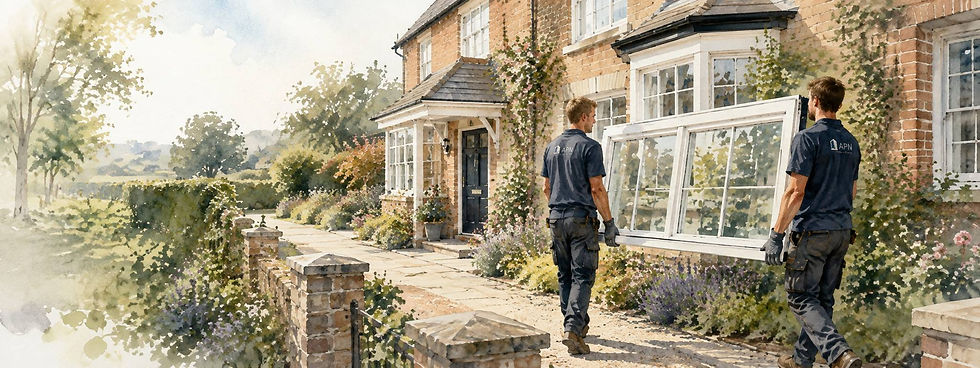
Window Replacement
Replace Tired, Draughty or Inefficient Windows with Modern, Secure Designs
Window replacement can improve the appearance, comfort, energy efficiency and security of your home. Whether your existing frames are deteriorating, the sealed units have failed or you simply want to modernise the property, carefully chosen replacement windows can make a noticeable difference.
Modern windows are available in UPVC, aluminium, timber and composite materials, with designs suitable for everything from contemporary houses to traditional period properties.
The right choice will depend on your home, budget, preferred appearance and maintenance requirements.

When Should Windows Be Replaced?
Older windows do not always need to be replaced simply because of their age. Some problems can be resolved through repairs, new seals, replacement handles or new double glazed units.
Complete window replacement may be more appropriate where you notice:
-
Persistent draughts around the frames
-
Condensation or misting between glass panes
-
Rotten or badly deteriorated timber
-
Cracked, warped or discoloured frames
-
Windows that are difficult to open or close
-
Damaged hinges, locks or opening mechanisms
-
Noticeable heat loss around the openings
-
Poor security or outdated locking systems
-
Excessive outside noise
-
A window style that no longer suits the property
A professional window installer should inspect the existing frames and explain whether repair or replacement offers the better long-term solution.
Benefits of Home Window Replacement
Better energy efficiency
Modern replacement windows are designed to reduce heat loss through the frame and glass. Double or triple glazing, low-emissivity coatings, insulated frames and warm-edge spacer bars can all improve thermal performance.
Replacing inefficient windows may help rooms feel warmer and reduce cold areas around the openings.
Improved security
New windows commonly include reinforced frames, multi-point locking systems, secure handles and internal glazing beads. Laminated or toughened glass can be specified where additional security or safety is required.
Reduced outside noise
Well-fitted replacement windows can reduce noise from roads, aircraft, schools and neighbouring properties. Homes in particularly noisy areas may benefit from acoustic glazing or glass panes of different thicknesses.
Improved appearance
Windows have a significant effect on the character of a property. Replacing bulky or outdated frames with carefully proportioned designs can improve both the exterior elevation and the quality of light inside the home.
Easier maintenance
UPVC and aluminium frames generally require little more than routine cleaning. Modern timber windows need some maintenance, but factory-applied coatings and engineered construction can provide improved durability.
Replacement Window Materials
UPVC replacement windows
UPVC is one of the most widely used materials for home window replacement. It is generally affordable, low-maintenance and available in numerous colours and woodgrain finishes.
UPVC windows can be supplied as standard casements, flush casements, sash windows, tilt-and-turn windows and bay-window configurations.
Aluminium windows
Aluminium frames provide a slim, contemporary appearance and are particularly suitable for larger glazed openings. They are strong, durable and available in a wide selection of powder-coated colours.
Their narrower sightlines can help maximise the amount of visible glass.
Timber replacement windows
Timber windows are often selected for period houses, conservation areas and properties where traditional detailing is important.
Softwood, hardwood and engineered timber frames can all be double glazed. Timber also provides considerable flexibility when matching existing mouldings, glazing bars and sash-window proportions.
Composite windows
Composite windows combine different materials, such as timber internally and aluminium externally. They can offer the warmth of a natural internal finish with a durable, low-maintenance exterior.
Choosing the Right Window Style
Replacement windows should suit both the building and the way each room is used.
Common styles include:
-
Casement windows
-
Flush casement windows
-
Sliding sash windows
-
Tilt-and-turn windows
-
Bay and bow windows
-
Fixed picture windows
-
Cottage-style windows
-
French windows
It is important to consider opening direction, ventilation, cleaning access and emergency escape requirements.
The proportions of the frames also matter. Oversized sections, misplaced glazing bars or inappropriate opening patterns can change the appearance of the whole property.
Window Replacement Cost
Window replacement cost varies depending on the number and size of the windows, frame material, glazing specification and complexity of installation.
The main factors affecting the quotation include:
-
UPVC, aluminium or timber frames
-
Double or triple glazing
-
Standard or acoustic glass
-
Toughened or laminated safety glass
-
Coloured or woodgrain finishes
-
Sash, casement or tilt-and-turn designs
-
Bay-window construction
-
Access and scaffolding requirements
-
Repairs to surrounding brickwork or plaster
-
Removal and disposal of the existing windows
-
Trickle vents and ventilation upgrades
-
Planning or conservation requirements
Timber and aluminium windows generally cost more than standard UPVC, while bespoke sash windows and unusually shaped frames may require specialist manufacture.
The lowest quotation may not always represent the best value. Frame quality, glass specification, installation standards and guarantees should all be considered.
Finding Window Installers Near You
Searching for “window installers near me” will usually produce a wide choice of local and national companies. Before selecting an installer, check that the quotation clearly identifies the product, glazing specification and installation work included.
Ask potential installers about:
-
Experience with similar properties
-
Window energy ratings and U-values
-
Frame and glass guarantees
-
Installation workmanship guarantees
-
Planning or conservation experience
-
FENSA, CERTASS or other relevant registration
-
Removal of the existing windows
-
Internal and external making good
-
Lead times and expected installation duration
-
Previous customer reviews and completed projects
A detailed written quotation makes it easier to compare replacement window companies on a like-for-like basis.
Replacing Only the Glass
Misting between the panes normally indicates failure of the sealed double glazed unit. Where the surrounding frame remains sound, it may be possible to replace only the glass.
This can be more economical than replacing the entire window. However, full replacement may provide better value where the frame is deteriorated, insecure, poorly insulated or difficult to operate.
Planning Permission for Replacement Windows
Like-for-like replacement windows can often be installed without planning permission. Additional controls may apply where the property is:
-
Listed
-
Within a conservation area
-
Subject to an Article 4 Direction
-
Being changed from timber to UPVC
-
Receiving windows of a substantially different design
-
Part of a flat, maisonette or converted building
Listed buildings usually require Listed Building Consent for alterations affecting historic windows. Local planning authorities may also expect replacement windows to match the original materials, profiles and glazing-bar details.
Where approval is required, scaled window elevations and detailed drawings may need to accompany the application.
Building Regulations
Replacement windows must comply with relevant Building Regulations covering thermal performance, ventilation, safety glazing and means of escape.
A registered competent-person installer can normally certify compliant work. Where the installer is not registered, a Building Regulations application may be required.
Existing escape windows should not normally be replaced with designs that reduce the available clear opening.
Preparing for Installation
Before installation begins, remove curtains, blinds, ornaments and furniture from around the windows. Installers should protect floors and nearby surfaces, but making the area accessible will help the work proceed efficiently.
The existing frames are normally removed carefully before the new windows are positioned, levelled, fixed, sealed and finished internally and externally.
Following installation, check that every window opens, closes and locks correctly and that surrounding finishes are neat and weatherproof.
Find Trusted Replacement Window Installers
The quality of installation is just as important as the windows themselves. Accurate measurement, appropriate glazing and careful fitting are essential for good energy performance, security and long-term reliability.
APN Double Glazing can connect homeowners with experienced local installers offering UPVC, aluminium, timber and specialist replacement windows.
Get in touch for expert advice and a free, no-obligation quotation for your home window replacement.