
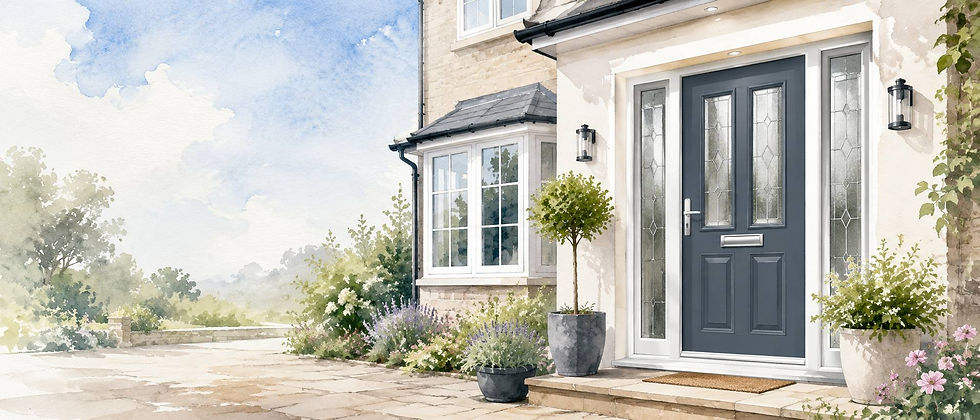
UPVC Doors
Secure, energy-efficient and low-maintenance doors available in a wide choice of colours, glazing options and realistic woodgrain finishes.
UPVC doors remain one of the most popular choices for homeowners looking to improve security, warmth, appearance and everyday practicality without the maintenance demands or higher cost of some alternative materials.
Modern UPVC front doors, UPVC external doors and other exterior UPVC doors are very different from the plain white plastic doors many people remember from earlier generations. Today’s systems are available in a wide choice of colours, realistic woodgrain finishes, decorative glazing styles and panel designs, making them suitable for everything from traditional terraced houses to modern family homes.
A properly specified and professionally installed UPVC entrance door can make a home

feel warmer, quieter, cleaner and more secure while also offering strong long-term value for money.
What Is a UPVC Door?
UPVC stands for unplasticised polyvinyl chloride. It is a strong, weather-resistant material widely used for external doors and window frames.
Unlike ordinary flexible PVC, UPVC is rigid and designed to withstand exposure to rain, sunlight, changing temperatures and regular use.
A typical UPVC external door combines:
-
A reinforced UPVC outer frame
-
An insulated door panel or glazed section
-
Weather seals around the frame and opening sash
-
Multi-point locking hardware
-
Strong hinges and reinforced components
-
Double or triple glazing where glass is included
-
A threshold designed to reduce draughts and water penetration
The final performance depends not only on the door itself, but also on the quality of the frame, reinforcement, glass, hardware and installation.
Why Choose UPVC Doors?
UPVC doors offer a practical combination of security, thermal performance, noise reduction, appearance and affordability.
For many homeowners, they provide one of the most balanced options available for front doors, back doors, side doors and other external entrances.
Improved Home Security
Security is often the first priority when choosing a new front or external door.
Modern UPVC doors can be fitted with multi-point locking systems that secure the door at several positions along the frame rather than relying on a single central lock. Depending on the system, these may include hooks, rollers, bolts and reinforced locking points.
Additional security features may include:
-
Anti-snap or high-security lock cylinders
-
Reinforced door frames
-
Internal steel or composite reinforcement
-
Toughened or laminated safety glass
-
Secure glazing beads
-
Strong hinges and hinge protection
-
Reinforced handles and lock cases
-
Door viewers, chains and smart access systems
A secure UPVC door should be considered as a complete system. A strong lock fitted into a weak frame will not provide the same level of protection as a well-designed and correctly installed door set.
Professional fitting is therefore essential. The frame must be fixed securely into the building opening, properly aligned and adjusted so that every locking point engages correctly.
A Warmer and More Comfortable Home
An old, poorly fitting external door can allow a surprising amount of heat to escape.
Gaps around the frame, worn seals, thin panels and single glazing can all contribute to cold draughts and uncomfortable internal temperatures. Replacing an ageing door with a modern insulated UPVC system can help create a more stable and comfortable indoor environment.
Energy-efficient UPVC doors may include:
-
Multi-chambered frames
-
Insulated door panels
-
Energy-efficient double glazing
-
Low-emissivity glass
-
Warm-edge spacer bars
-
Insulated thresholds
-
Continuous weather seals
-
Better compression when the door is locked
These features help reduce unwanted heat transfer and draughts. The result can be a warmer hallway, kitchen, utility room or living space, particularly during colder weather.
A new door will not transform the efficiency of an entire property on its own, but it can remove a weak point in the building envelope and support wider energy-saving improvements.
Lower Energy Use
By reducing draughts and limiting heat loss, a properly fitted UPVC external door can help reduce the amount of energy required to maintain a comfortable indoor temperature.
The exact saving will depend on:
-
The condition of the existing door
-
The size of the opening
-
The amount of glazing
-
The insulation within the new door
-
The quality of installation
-
The heating system and wider property efficiency
Replacing a badly fitted or poorly insulated door is usually most beneficial where the existing entrance feels noticeably cold, draughty or difficult to seal.
Homeowners should compare the overall door specification rather than choosing solely by appearance or headline price.
Better Protection from Outside Noise
A modern UPVC entrance door can also help reduce the amount of outside noise entering the home.
This can be particularly valuable for properties close to:
-
Busy roads
-
Schools
-
Railway lines
-
Airports and flight paths
-
Town centres
-
Shared pathways
-
Commercial premises
-
High-traffic residential streets
Noise reduction depends on the complete door construction. A heavy insulated panel will generally perform differently from a door containing a large area of standard glazing.
Where external noise is a significant concern, the door may be specified with:
-
Laminated acoustic glass
-
Different glass thicknesses
-
Larger insulated cavities
-
Heavier insulated panels
-
Improved compression seals
-
Better frame sealing
-
A well-designed threshold
Even a high-performance door will underperform if there are gaps around the perimeter. Accurate installation and sealing are therefore just as important as the product specification.
A Cleaner and Less Draughty Home
Draughts do more than make a room feel colder. Gaps around an old external door can also allow dust, traffic residue, pollen and outside debris to enter the home.
A properly sealed UPVC outside door can help reduce uncontrolled air leakage around the frame and threshold. This may make entrance areas easier to keep clean, particularly in properties on busy roads or exposed sites.
Modern weather seals can also reduce:
-
Dust entering around the door frame
-
Leaves and debris blowing beneath the threshold
-
Cold air moving through the entrance
-
Rainwater penetration
-
Insects entering through poorly sealed gaps
The door should still provide appropriate ventilation where required, but ventilation should be controlled rather than caused by unwanted gaps.
Attractive Woodgrain Finishes and Colours
One of the biggest improvements in modern UPVC door design is the range of finishes now available.
Homeowners are no longer limited to plain white frames. UPVC doors can be produced in a wide variety of colours and realistic grained finishes designed to imitate the appearance of painted or stained timber.
Popular options include:
-
White
-
Black
-
Anthracite grey
-
Slate grey
-
Cream
-
Chartwell green
-
Sage green
-
Heritage blue
-
Navy
-
Red
-
Rosewood
-
Golden oak
-
Irish oak
-
Light oak
-
Walnut-style finishes
Woodgrain foils can give the surface a more natural texture and soften the appearance of the door. This is particularly useful where a homeowner wants some of the character of timber without the regular painting and maintenance.
Different colours may also be used internally and externally. For example, a dark grey exterior can be combined with a white internal finish to suit the décor of the hallway.
Designs for Traditional and Modern Homes
UPVC doors are available in a broad range of styles.
Traditional UPVC Front Doors
Traditional designs may include:
-
Decorative raised panels
-
Glazed upper sections
-
Georgian-style glazing bars
-
Coloured or patterned glass
-
Brass-effect hardware
-
Traditional knockers
-
Period-style handles
-
Fanlights above the door
-
Side panels around the entrance
These options can work well with terraced, semi-detached, cottage-style and suburban properties.
Contemporary UPVC Entrance Doors
More modern designs may feature:
-
Large simple glazed panels
-
Long vertical glass inserts
-
Dark grey or black finishes
-
Minimal glazing bars
-
Stainless-steel-effect handles
-
Clean horizontal panel lines
-
Matching sidelights
-
Modern house numbers
-
Smart locks and access controls
A simpler design can significantly modernise the appearance of the front elevation.
Low Maintenance
One of the main reasons homeowners choose UPVC doors is the relatively low level of maintenance required.
Unlike timber, UPVC does not normally need regular painting, staining or varnishing. Routine care generally involves cleaning the surfaces and keeping the hardware in good working order.
Typical maintenance includes:
-
Wiping frames with warm soapy water
-
Cleaning glass and decorative panels
-
Removing dirt from drainage channels
-
Lubricating locks and hinges where recommended
-
Checking weather seals
-
Adjusting hinges if the door begins to drop
-
Tightening loose handles
-
Keeping the threshold clear of debris
Harsh chemicals, abrasive cleaners and aggressive solvents should be avoided because they may damage the surface finish, seals or decorative foils.
Good-quality UPVC doors can retain their appearance for many years when properly installed and maintained.
Excellent Value for Money
UPVC external doors are often more affordable than bespoke timber, high-end aluminium or premium composite alternatives.
This makes them attractive for homeowners who want a meaningful improvement in security, warmth and appearance without committing to the highest-cost door system.
Their value comes from the combination of:
-
Competitive purchase cost
-
Low maintenance
-
Good thermal performance
-
Wide design choice
-
Long service life
-
Readily available replacement parts
-
Straightforward installation
-
Good everyday durability
The cheapest door is not always the best value. Very low-cost products may use weaker reinforcement, basic locks, thinner panels or lower-quality hardware.
A better approach is to compare complete specifications, including the locking system, panel construction, glazing, frame reinforcement, hinges, guarantees and installation quality.
UPVC Front Doors
A front door makes an immediate impression and plays a major role in the security and weather protection of a home.
Modern UPVC front doors can be designed around the style of the property rather than treated as a purely functional product.
Important choices include:
-
Door colour
-
Panel layout
-
Glazing design
-
Handle style
-
Letter plate position
-
Threshold height
-
Door opening direction
-
Side panels
-
Fanlights
-
Privacy glass
-
Security specification
A well-chosen front door can improve kerb appeal while making the entrance warmer, safer and easier to use.
UPVC Back and Side Doors
UPVC is also widely used for back doors, kitchen doors, utility doors, garage access doors and side entrances.
These doors often need to balance security with natural light and access to the garden.
Popular configurations include:
-
Half-glazed UPVC doors
-
Fully glazed doors
-
Stable-door-style designs
-
Panelled utility doors
-
French doors
-
Patio doors
-
Doors with integrated blinds
-
Low-threshold access doors
Security should not be overlooked simply because the door is at the back or side of the property. Less visible entrances may be attractive targets, so the same care should be taken with locks, frames, glazing and installation.
Glazing Options for UPVC Doors
Glass can transform the appearance of a UPVC entrance door and bring natural light into a dark hallway or kitchen.
Available glazing options may include:
-
Clear glass
-
Frosted privacy glass
-
Patterned glass
-
Coloured decorative glass
-
Leaded designs
-
Georgian bars
-
Laminated security glass
-
Toughened safety glass
-
Acoustic glass
-
Solar-control glass
-
Low-emissivity energy-efficient glass
Privacy and security should be considered carefully, particularly where the glass is close to the lock or handle.
Laminated glass can provide additional resistance because the interlayer helps hold the glass together after impact. Toughened glass is designed to break into smaller, less dangerous fragments when shattered.
The most suitable choice will depend on where the door is installed and the level of protection required.
UPVC Doors Versus Composite Doors
Composite doors are often compared with UPVC front doors.
A composite door usually combines several materials, potentially including timber, insulating foam, reinforced plastics and a durable external skin. Composite doors are generally heavier and may offer a more substantial feel.
UPVC doors are often:
-
More affordable
-
Easier to maintain
-
Available in a wide range of styles
-
Suitable for front, side and rear entrances
-
Cost-effective for rental and family homes
-
Quick to replace
-
Well suited to matching UPVC windows
Composite doors may be preferred where the homeowner wants:
-
A thicker and heavier door
-
A more premium appearance
-
A highly textured timber-style finish
-
Increased rigidity
-
A broader range of luxury panel designs
Neither material is automatically right for every property. Specification, budget, location and personal preference should guide the choice.
UPVC Doors Versus Timber Doors
Timber doors offer natural character and can be particularly suitable for period, listed and conservation properties.
However, timber usually requires more maintenance and may cost more, especially where bespoke joinery is needed.
UPVC doors offer:
-
Lower routine maintenance
-
No regular repainting
-
Good weather resistance
-
Competitive pricing
-
Consistent factory finishes
-
Strong thermal performance
-
Wide availability
Timber may remain the preferred option where authenticity, conservation requirements or traditional detailing are especially important.
UPVC Doors Versus Aluminium Doors
Aluminium doors are known for strength, slim profiles and a modern architectural appearance.
They are particularly effective for large openings, contemporary homes and high-end glazing systems.
UPVC doors are generally more economical and may offer a warmer, more familiar appearance for typical residential properties.
Aluminium may be preferred for:
-
Large glazed doors
-
Minimal frame widths
-
Contemporary extensions
-
Dark architectural finishes
-
Very wide or tall openings
-
Matching bifold or sliding systems
UPVC remains a strong choice where the priorities are value, warmth, low maintenance and everyday practicality.
How Long Do UPVC Doors Last?
The service life of a UPVC door depends on the quality of the product, installation, exposure and maintenance.
The frame itself may remain serviceable for many years, while individual components such as handles, cylinders, hinges, seals or glazing units may require adjustment or replacement earlier.
Factors affecting lifespan include:
-
Product quality
-
Exposure to strong sunlight
-
Coastal or exposed locations
-
Frequency of use
-
Correct installation
-
Door alignment
-
Hardware maintenance
-
Drainage and sealing
-
Quality of the surface finish
A door that is difficult to lock, catches on the frame or has visible gaps should be adjusted promptly. Continued use while misaligned may place unnecessary strain on locks, hinges and handles.
Common Problems with Older UPVC Doors
Older UPVC doors may develop issues such as:
-
Draughts around the frame
-
Failed or misted glazing
-
Broken handles
-
Worn lock mechanisms
-
Doors dropping on their hinges
-
Discoloured frames
-
Cracked panels
-
Failed seals
-
Water ingress
-
Difficulty locking
-
Damaged thresholds
Some problems can be repaired without replacing the full door. Locks, hinges, handles, glass and seals can often be replaced separately.
Full replacement may be more appropriate where the frame is badly distorted, the panel has failed, the door is poorly insulated or the overall security is no longer adequate.
Professional UPVC Door Installation
Even a good-quality door will perform poorly if it is incorrectly installed.
Professional installation should include:
-
Accurate measurement of the opening
-
Removal of the old frame with minimal damage
-
Correct positioning and levelling
-
Secure mechanical fixing
-
Appropriate packers and supports
-
Proper sealing around the frame
-
Correct threshold installation
-
Lock and hinge adjustment
-
Testing of every locking point
-
Making good around the opening
-
Demonstration of operation and maintenance
The installer should also confirm the product specification, guarantees and any certification supplied with the door.
Choosing a UPVC Door Installer
When comparing installers, homeowners should look beyond the headline price.
Useful questions include:
-
What reinforcement is included in the frame?
-
What locking system will be fitted?
-
What type of lock cylinder is supplied?
-
Is the glass toughened or laminated where required?
-
What is the panel construction?
-
What thermal performance is offered?
-
Is removal of the existing door included?
-
Is internal and external making good included?
-
What guarantee is provided?
-
Who is responsible for servicing or adjustments?
-
Are disposal costs included?
-
Is the quotation based on the complete installation?
A detailed written quotation helps prevent confusion and allows meaningful comparison between different systems.
Are UPVC Doors Worth It?
For many UK homeowners, the answer is yes.
UPVC doors provide a strong combination of:
-
Improved security
-
Better thermal comfort
-
Reduced draughts
-
Lower maintenance
-
Good noise reduction
-
Wide colour choice
-
Attractive woodgrain finishes
-
Improved kerb appeal
-
Practical durability
-
Excellent value for money
They are particularly well suited to households looking for a reliable, attractive external door without the cost or maintenance requirements of more specialist alternatives.
The best results come from choosing a suitable design, checking the full technical specification and using an experienced installer who will fit and adjust the door correctly.
Find Trusted UPVC Door Installers
The quality of the installation is just as important as the product you choose. APN Double Glazing can help connect you with experienced local installers who can assess your property, explain the available options and provide a clear quotation based on your requirements.
Get in touch for expert advice and a free, no-obligation quote today.