

Understanding Window Energy Ratings
Learn what window energy ratings and U-values mean, how A-rated windows perform and what to compare when choosing energy-efficient double glazing.
Window energy ratings are designed to make it easier to compare the thermal performance of different windows. However, homeowners are often presented with several figures and terms, including A-rated windows, Window Energy Ratings and U-values, without a clear explanation of how they relate to one another.
A Window Energy Rating gives the complete window a simple letter grade, while its U-value measures the rate at which heat passes through the glass and frame. Both can provide useful information, but they describe window performance in different ways.

What Are Window Energy Ratings?
Window Energy Ratings, commonly shortened to WER, assess the overall energy performance of a complete window.
The British Fenestration Rating Council uses a coloured rating scale running from A++ to E. Genuine certified products should carry a label showing the rating, the certified company and its BFRC licence details.
The rating system is similar to the energy labels used on household appliances, allowing homeowners to compare different window products more easily.
A higher rating generally indicates a better overall level of energy performance.
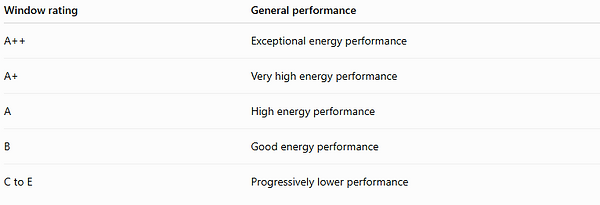
The rating applies to the window system that has been tested and certified. It should not be assumed that every window produced by a particular manufacturer will automatically have the same rating.
How Is a Window Energy Rating Calculated?
A Window Energy Rating considers several aspects of performance rather than measuring heat loss alone.
These include:
-
Heat escaping through the glass and frame
-
Useful heat gained from sunlight
-
Air leakage through the window
-
The overall construction of the window system
The calculation uses standardised window sizes, occupancy assumptions and average climate conditions so products can be compared on a consistent basis. Windows achieving ratings from A to A++ have a rating value of zero or above under the BFRC calculation method.
This does not mean that an A-rated window produces free heating throughout the year. It means that, under the standard rating
calculation, useful solar gains balance or exceed the assessed heat loss and air leakage.
What Is a U-Value for Windows?
A window U-value measures how readily heat passes through the complete window.
It is expressed in:
W/m²K — watts per square metre per degree Kelvin
The important point for homeowners is simple:
The lower the U-value, the better the window is at reducing heat loss.
For example, a window with a U-value of 1.0 W/m²K provides better thermal insulation than one with a U-value of 1.6 W/m²K, provided the figures have been calculated on a comparable basis.
A whole-window U-value should account for both:
-
The glazing unit
-
The window frame
This is different from the centre-pane U-value, which measures only the central area of the glass and can make a window appear more efficient than the complete product.
Window Energy Rating Versus U-Value
Although Window Energy Ratings and U-values both relate to energy efficiency, they should not be treated as the same measurement.
A U-value focuses on insulation and heat loss. A Window Energy Rating gives a broader assessment that also considers the benefit of solar energy entering through the glass.
This means a window with a particularly low U-value will not necessarily have the highest WER if another product allows greater useful solar gain.
Conversely, a high Window Energy Rating does not mean that the U-value should be ignored. The two figures should be reviewed together when comparing quotations.
What Are A-Rated Windows?
A-rated windows are products that have achieved an A classification under a recognised Window Energy Rating scheme.
They are generally considered energy-efficient windows and are now widely available in uPVC, aluminium and timber systems.
Features commonly used to achieve an A rating include:
-
Low-emissivity glass
-
Argon or another insulating gas between the panes
-
Warm-edge spacer bars
-
Insulated frame chambers
-
Effective weather seals
-
Carefully designed frame and glazing combinations
-
Reduced air leakage
The exact specification will vary between manufacturers. Homeowners should therefore ask for the rating certificate or licence details covering the window system being quoted.
Is A-Rated Double Glazing Worth Choosing?
For many replacement-window projects, A-rated double glazing provides a good balance between energy efficiency, cost and practicality.
It can help reduce heat loss compared with older single glazing or early double-glazed units, particularly where existing windows are draughty, poorly sealed or have failed glazing.
However, the letter rating should not be the only consideration. Also compare:
-
Whole-window U-value
-
Frame material and construction
-
Glass specification
-
Security features
-
Ventilation provision
-
Installation quality
-
Guarantees and warranties
-
Appearance and frame thickness
An inexpensive A-rated window is not automatically a better overall product than a well-constructed alternative with stronger security, slimmer frames or a more appropriate design for the property.
What Is the Best U-Value for Windows?
The best U-value is normally the lowest practical whole-window value available within the homeowner’s budget and design requirements.
Typical modern window quotations might show whole-window U-values around:
-
1.4 W/m²K for standard compliant replacement windows
-
1.2 W/m²K for improved energy-efficient windows
-
1.0 W/m²K or below for some high-performance or triple-glazed systems
These are general performance examples rather than guarantees for every product.
In England, current Approved Document L guidance for new and replacement windows in existing dwellings gives a limiting standard of 1.4 W/m²K or Window Energy Rating Band B minimum, subject to the type of work and applicable transitional arrangements.
An A-rated window therefore generally exceeds the minimum Band B energy-rating route, although its precise whole-window U-value should still be checked.
Does Triple Glazing Always Have the Best U-Value?
Triple glazing can achieve lower U-values than standard double glazing because it contains an additional pane and insulating cavity.
However, triple glazing is not automatically the best option for every home.
It may offer benefits where:
-
The property is in a particularly exposed location
-
Maximum thermal performance is required
-
The home is being extensively upgraded
-
External noise is also a concern
-
The existing window openings can accommodate the heavier units
Possible disadvantages include:
-
Higher initial cost
-
Heavier glazing units
-
Reduced solar gain in some products
-
Wider or more substantial frames
-
Limited benefit where other parts of the property remain poorly insulated
Good-quality A-rated double glazing may be a more balanced choice for many existing homes.
What Affects a Window’s Energy Performance?
The glass is only one part of an energy-efficient window.
Low-Emissivity Glass
Low-emissivity, or low-E, glass has a thin coating designed to reflect heat back into the room while allowing daylight through.
Gas-Filled Glazing Units
The cavity between the panes may be filled with argon or another insulating gas to reduce heat transfer.
Warm-Edge Spacer Bars
Spacer bars separate the panes around the edge of the sealed unit. Warm-edge materials can reduce heat loss around the perimeter of the glass.
Window Frames
The frame material, profile and internal construction all affect the whole-window U-value. uPVC, aluminium, timber and composite windows can all achieve good ratings when properly designed.
Weather Seals
Damaged or poorly fitted seals can allow draughts and reduce the performance of the completed window.
Installation
Gaps around the window frame, inadequate insulation and poor sealing can undermine the performance of even a highly rated product.
Do Energy-Efficient Windows Prevent Condensation?
Energy-efficient windows can reduce condensation on the internal surface of the glass because the inside pane normally remains warmer.
However, they cannot eliminate condensation caused by excessive moisture or inadequate ventilation.
Condensation may still occur where:
-
Clothes are dried indoors
-
Kitchens and bathrooms are poorly ventilated
-
Extract fans are missing or ineffective
-
Rooms are not consistently heated
-
Furniture prevents air circulation
-
The property has high internal humidity
Occasional condensation on the outside surface of modern glazing can indicate that the window is retaining heat effectively. The external pane remains colder because less warmth is escaping from inside the house.
How to Compare Window Quotations
When obtaining quotations, ask each installer to provide comparable information.
A useful specification should include:
-
Window Energy Rating
-
Whole-window U-value
-
Double- or triple-glazing details
-
Glass thickness and cavity size
-
Low-E coating
-
Gas filling
-
Spacer-bar type
-
Frame material and profile
-
Ventilation provision
-
Security specification
-
Installation and product guarantees
Avoid comparing one company’s whole-window U-value with another company’s centre-pane glass value. The figures measure different things and can create a misleading comparison.
Check That the Rating Applies to Your Windows
The energy rating should apply to the exact window system being supplied, rather than a general claim that the installer offers energy-efficient windows.
Check:
-
The certified manufacturer or installer name
-
The rating achieved
-
The frame system
-
The glass specification
-
The licence or certificate number
-
Whether changes to colour, glazing or configuration affect the rating
BFRC provides a directory allowing homeowners to search for approved companies and check licence details.
Choosing the Right Energy-Efficient Windows
For most homeowners, the best choice will be a properly certified window that combines:
-
A good Window Energy Rating
-
A low whole-window U-value
-
Appropriate ventilation
-
Secure locking systems
-
A design suited to the property
-
Professional installation
-
A dependable guarantee
The highest rating available may be attractive, but it should be considered alongside cost, appearance, frame material, maintenance and the expected benefit within the property.
Find Trusted Energy-Efficient Window Installers
Energy ratings and U-values are only part of a successful window replacement project. Correct surveying, specification and installation are essential if the finished windows are to perform as expected.
APN Double Glazing can connect homeowners with experienced local window installers who can explain the available ratings, compare suitable products and provide quotations based on the requirements of the property.
Get in touch for expert advice and a free, no-obligation quote.